


For general contractors, engineering companies, and equipment rental providers, lifting equipment often plays a critical role in determining the success of a construction schedule. If a crane cannot arrive on time, downstream operations — including steel structure installation, glass curtain wall installation, industrial equipment maintenance, and rooftop HVAC installation — may be forced to stop, resulting in costly delays and significant idle expenses.
In today’s uncertain global supply chain environment, delayed delivery of specialized lifting equipment has become a major challenge affecting project execution. This guide explores how spider crane lead times can impact project profitability and explains why choosing a ready-to-ship mini crawler crane is a strategic solution for maintaining construction timelines, improving construction productivity, and reducing schedule risks for modern engineering contractors.


For time-sensitive applications such as emergency repairs, shutdown maintenance, and short-window construction projects, equipment availability often has a far greater impact on project success than the initial purchase price.
When a critical narrow-access lifting machine is unavailable on site, the financial and operational consequences can quickly escalate:
For many construction equipment users, delays in receiving critical lifting machinery can affect labor planning, subcontractor coordination, and overall jobsite efficiency.
Modern commercial construction contracts often include strict liquidated damages clauses for late completion. Missing a critical project milestone may expose contractors to substantial financial penalties from project owners.
In high-density urban construction, emergency repair projects, and seasonal industrial shutdown maintenance, the available construction window is often extremely limited. Even a delay of several weeks in equipment delivery can cause contractors to miss the optimal working period and disrupt the entire project schedule.
For many customized spider cranes, traditional manufacturing lead times can typically range from 30 to 90 days. Depending on the destination port, customs clearance, and transportation arrangements, international shipping may require an additional 20 to 45 days.
For contractors working under strict project deadlines, waiting three to four months for a lifting machine creates an unacceptable level of schedule uncertainty, reduces equipment availability, and limits the ability to respond quickly to time-sensitive lifting projects.

Understanding the structural differences between a factory stock program and a made-to-order production model helps project managers and procurement teams reduce equipment delivery risks at the early planning stage.
| Evaluation Criteria | Factory Stock / In Stock | Made-to-Order / Custom Production |
| Production Lead Time | Immediate Availability — Standard machines are already completed and ready for shipment | Typically 30–90 days, depending on manufacturer capacity, customization requirements, and supply chain conditions |
| Delivery Speed | Fast Delivery — Equipment can be prepared, loaded, and shipped immediately after order confirmation | Depends on factory production scheduling, component availability, and assembly progress |
| Project Risk | Low Risk — Actual equipment is available for inspection, with factory testing and quality checks completed before shipment | Higher Risk — Delivery schedules may be affected by production delays or potential shortages of critical components |
| Equipment Supply Assurance | Equipment availability can be confirmed in advance, with continuous inventory replenishment | Final delivery timing is difficult to predict until production is completed |
| Suitability for Urgent Projects | Yes — Designed for emergency replacement, short construction windows, and time-sensitive projects | Limited — Unable to meet urgent project requirements due to uncertain production timelines |
| Overall Financial Impact | Helps prevent downtime losses, extended rental costs, and schedule penalties while supporting on-time project completion | Higher risk of labor idle time, extended site costs, additional rental expenses, and potential delay penalties |
For companies managing complex lifting applications, selecting a supplier with reliable inventory availability is essential. A ready-to-ship mini crawler crane provides a more predictable equipment supply strategy compared with traditional production models.
In modern construction project management, lifting equipment is not simply a construction tool — it is a critical resource that can directly influence the overall project schedule.
The availability and delivery timing of lifting equipment can significantly impact a procurement manager’s performance metrics through four key areas:
Project Mobilization: Equipment Availability Determines Whether a Project Can Start on Schedule
Project mobilization is a critical preparation stage before construction begins. It involves workforce scheduling, site preparation, material logistics, equipment coordination, and safety planning.


For projects that require spider cranes, any delay in equipment arrival can leave glass installation crews or material handling teams waiting on site, resulting in missed lifting windows and increased project management costs.
Securing a ready-to-deploy spider crane in advance is an effective way to reduce mobilization risks and ensure that construction activities can begin as planned.
If any task on the critical path is delayed, the entire project completion date may be affected. In many industrial and commercial construction projects, lifting operations are a key milestone within the overall schedule.
Typical project sequence:
Building structure completion Lifting equipment arrival
 Glass panel / steel structure positioningCurtain wall installation and structural fixingInterior finishing and system commissioningFinal project inspection and handover
If a mini crawler crane fails to arrive according to schedule, the following construction activities may experience a domino effect of delays.
Therefore, selecting a supplier with reliable inventory availability and fast delivery capability is not only an equipment purchasing decision — it is a way to protect the entire project timeline.
As a narrow access crane, a mini crawler crane can enter restricted areas such as indoor facilities, commercial buildings, and limited-access construction zones.
However, even the most capable narrow-access lifting equipment cannot provide value if it arrives too late. Delayed delivery prevents contractors from taking advantage of the crane’s compact design and flexible mobility.
Preparing equipment that can be quickly deployed helps reduce material handling delays, minimize secondary transportation requirements, and simplify coordination with larger equipment and site operations.


Modern construction projects typically involve multiple subcontractors working together, including steel structure contractors, curtain wall installers, electrical teams, and HVAC specialists. These teams often share the same limited construction window.
When a spider crane is delayed, the impact extends beyond the lifting operation itself. It can disrupt subcontractor schedules, affect work permits for elevated operations, and create conflicts with transportation and site coordination plans.
The more reliable the equipment supply and delivery schedule, the lower the uncertainty and coordination risk throughout the entire project.

For contractors, equipment rental companies, and project management teams, equipment purchasing is not simply about acquiring a machine — it is about ensuring that the right equipment arrives at the right time and continues to deliver value throughout the project lifecycle.These machines provide a flexible lifting solution for contractors who need reliable equipment without long manufacturing delays.
Choosing an in-stock spider crane / ready-to-ship mini crane helps companies:
In-stock equipment allows orders to be confirmed, inspected, and prepared for transportation quickly, enabling construction teams to begin operations according to the planned schedule.
Compared with waiting for a newly manufactured machine, factory stock equipment allows contractors to respond faster to:
Emergency repair projects;
Short-duration construction tasks;
Temporary equipment replacement needs.
By reducing equipment waiting time, contractors can secure valuable construction windows and minimize project startup delays.
In many construction and industrial projects, spider cranes perform critical lifting operations, including:
Glass curtain wall installation;
Steel structure positioning;
Industrial equipment handling;
HVAC equipment installation.
If the required lifting equipment does not arrive on schedule, all downstream activities may be delayed.
Equipment availability has therefore become a key factor directly affecting project completion timelines.
Assume a critical spider crane is delayed by 60 days. The project may face significant financial and operational consequences:
| Cost Category | In-Stock Spider Crane | 60-Day Delivery Delay | Business Impact |
| Project Mobilization | Construction starts according to schedule | Overall project startup is delayed | Critical milestones are pushed back, extending the entire project timeline |
| Labor Idle Time | Minimal waiting time for crews | Multiple teams remain idle while waiting for equipment arrival | Significant unproductive labor costs directly reduce project profitability |
| Equipment Rental Costs | Supporting equipment operates within the planned rental period | Rental periods for forklifts, aerial work platforms, and other equipment are extended | Additional rental expenses accumulate throughout the project |
| Contract Performance | Smooth execution according to the agreed schedule | Increased risk of failing to meet delivery milestones | Potential exposure to substantial liquidated damages and contractual penalties |
| Project Management Resources | Management teams focus on project execution | Additional coordination, schedule adjustments, and supplier follow-ups are required | Higher administrative workload and increased project complexity |
| Opportunity Cost | Teams can complete the project and move to the next opportunity | Equipment and workforce remain tied up on delayed projects | Lost opportunities for new bids and reduced business growth potential |
For large commercial and industrial projects, the financial impact of waiting for equipment can often exceed the difference in equipment purchase cost.
For contractors and equipment rental companies, maintaining access to reliable in-stock lifting equipment is not only an operational advantage — it is also a competitive advantage in the market.When responding to:
Emergency construction requirements;
Projects with strict completion deadlines;
Customers requiring immediate project mobilization;
companies that can provide ready-to-deploy lifting solutions are more likely to gain customer confidence and secure new business opportunities.
As a professional manufacturer specializing in the research, development, manufacturing, and global export of Spider Cranes and Mini Crawler Cranes, GLT LIFTS has established a standardized Factory Stock Mini Crane Program. By maintaining ready-to-ship inventory and an efficient delivery system, we help contractors, equipment rental companies, and project teams worldwide minimize equipment waiting time and keep projects on schedule.
Compared with the traditional Made-to-Order production model, the GLT LIFTS Factory Stock Program offers significant advantages:
| Purchasing Consideration | Traditional Made-to-Order | GLT LIFTS Factory Stock Program |
| Production Lead Time | Typically requires 30–90 days for manufacturing | Standard models are pre-built and ready for immediate shipment |
| Project Response Time | Subject to production schedules and component availability | Logistics can be arranged immediately after inventory confirmation |
| Equipment Verification | Limited to prototype demonstrations or technical drawings | Available with actual machine photos, video inspections, and factory testing records |
| Emergency Project Support | Difficult to meet urgent project schedules | Ideal for emergency replacements, equipment replenishment, and fast-track projects |
| Project Risk | Higher risk of delays, labor downtime, and contractual penalties | Reduces construction interruptions caused by equipment lead times |
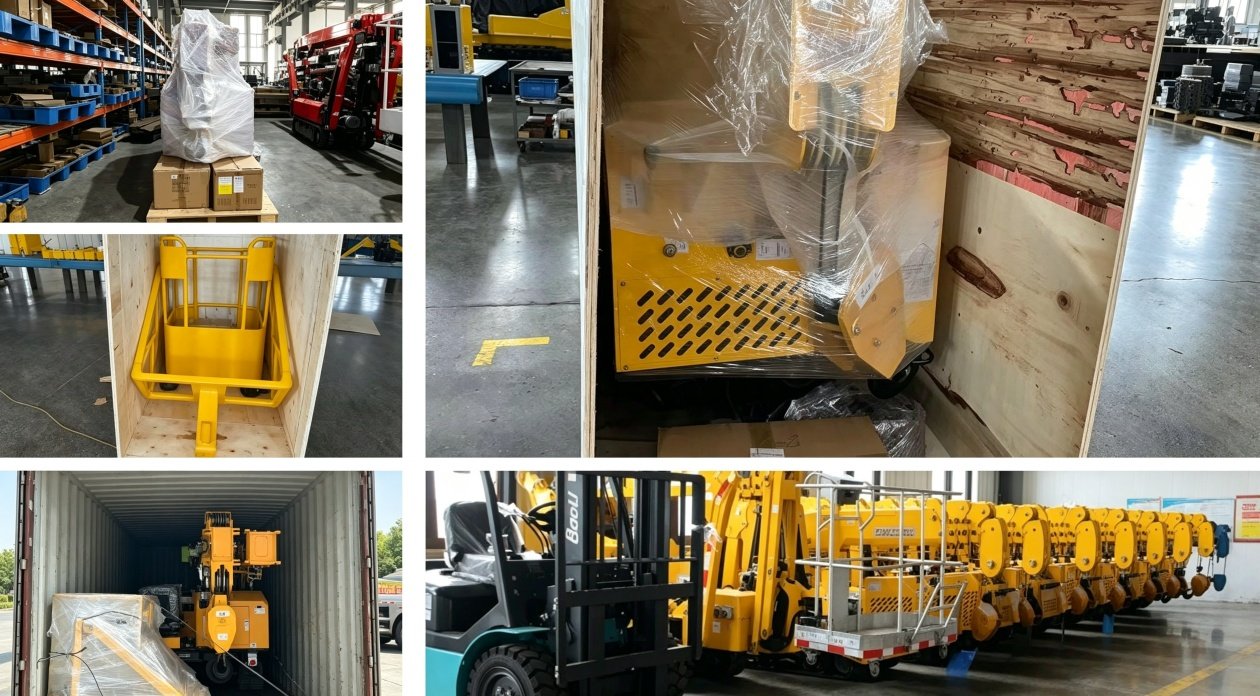
GLT LIFTS maintains a continuous production and inventory program covering 1-ton to 12-ton Mini Crawler Cranes, ensuring that customers can quickly secure the right lifting solution without waiting for a new production cycle.
Whether your project involves:
Glass curtain wall installation
Commercial building maintenance
Precision material handling inside factories
HVAC equipment installation
Infrastructure construction and industrial maintenance
our experienced team can quickly recommend the most suitable spider crane based on your lifting requirements and working conditions.
Instead of waiting weeks or months for production, our in-stock machines allow project managers to secure equipment sooner, improve scheduling flexibility, and reduce the risk of costly construction delays.
Every in-stock Mini Crawler Crane undergoes a comprehensive quality inspection before shipment to ensure reliable performance from the moment it arrives on site.
Our standardized inspection process includes:
Structural & Welding Inspection
Critical structural components undergo weld inspections, strength verification, and appearance checks to ensure long-term durability under demanding lifting conditions.
Hydraulic System Testing
The hydraulic system is pressure-tested and fully calibrated to deliver smooth, responsive, and precise proportional control during lifting operations.
Intelligent Safety System Calibration
The integrated Load Moment Indicator (LMI) system is tested and calibrated to verify load monitoring, moment protection, and built-in safety limits.
Complete Machine Functional Testing
Each crane undergoes comprehensive testing of the power system, electrical components, travel mechanism, boom functions, and operating controls before leaving the factory.
Because every machine is fully assembled, inspected, and tested prior to shipment, it can be deployed quickly upon arrival, allowing contractors to reduce commissioning time and put the equipment into service with minimal delay.


Unexpected situations often require immediate equipment availability, including:
Emergency equipment replacement
Accelerated recovery after project delays
Temporary fleet expansion for rental companies
Seasonal construction demand and peak workloads
The GLT LIFTS Factory Stock Program is designed to respond quickly to these time-sensitive requirements.
Once the commercial agreement is confirmed, our logistics team can promptly arrange:
Final equipment inspection
Heavy-duty securing and load fastening
Container loading
Export documentation preparation
International shipping coordination
Supported by an efficient inventory management system and extensive export experience, GLT LIFTS helps customers minimize the time between purchasing approval and equipment shipment, enabling projects to stay on schedule and reducing the risk of costly downtime.


While readily available inventory helps keep projects on schedule, proven engineering reliability is what ensures long-term performance and safe operation. Every GLT LIFTS Spider Crane is built to industrial-grade standards and engineered to deliver dependable lifting performance across indoor, outdoor, and confined-space applications.
The boom is manufactured from high-strength manganese steel, providing an excellent balance of reduced machine weight, superior bending resistance, and enhanced fatigue durability. Combined with a high-performance proportional hydraulic control system, GLT LIFTS spider cranes deliver smooth, millimeter-level precision for delicate lifting operations.
A wide rubber crawler undercarriage distributes ground pressure more evenly, allowing the crane to travel safely on finished floors, shopping malls, factories, and other sensitive surfaces while minimizing the risk .
To accommodate a wide range of working environments, GLT LIFTS offers both Lithium-Electric and Bi-Energy power configurations.
Lithium-Electric Models: Deliver zero exhaust emissions and ultra-low noise operation, making them ideal for hospitals, data centers, commercial buildings, and other confined or environmentally sensitive indoor work environments.
Bi-Energy Models: Combine diesel and electric power to maximize operational flexibility. Operators can switch between power sources as jobsite conditions require, enabling high-performance outdoor lifting while maintaining low-emission operation indoors—all without relying solely on an external power supply.
Each GLT LIFTS spider crane is equipped with four independently controlled hydraulic outriggers that can be quickly adjusted to accommodate uneven terrain, sloped surfaces, stairways, and confined working areas.
Integrated with a real-time Load Moment Indicator (LMI) system and stability monitoring technology, the crane continuously monitors lifting conditions and automatically limits unsafe operations whenever preset safety thresholds are approached, providing operators with enhanced confidence and reliable jobsite protection.

A curtain wall contractor in North America was replacing large glass panels in the atrium of a commercial shopping mall when the original lifting equipment suffered an unexpected mechanical failure. With the project facing substantial delay penalties if the work was not completed within seven days, the contractor urgently needed an alternative lifting solution.
3-Ton Electric Spider Crane for Indoor Glass Installation
The replacement crane needed to:
Pass easily through standard double glass doors
Operate with zero emissions or ultra-low noise for indoor use
Protect finished marble flooring with low ground pressure
Deliver precise lifting performance within a confined indoor workspace
After contacting the GLT LIFTS Factory Stock team, the contractor was immediately placed on our priority fulfillment program for urgent orders.
A fully assembled 3-ton Bi-Energy Spider Crane was allocated directly from finished inventory, completed final inspection, and prepared for immediate shipment to the project site without waiting for a new production schedule.
By selecting an in-stock machine, the contractor avoided a traditional manufacturing lead time of more than 45 days.
The spider crane arrived in time to complete the precise installation of large curtain wall glass panels before the shopping mall reopened, eliminating the risk of costly project delays while helping the contractor deliver the project on schedule.
With the GLT LIFTS Factory Stock Program, you can reserve an available machine immediately, reducing equipment procurement lead times from months to just days and maintaining greater control over your construction schedule.
Every in-stock spider crane undergoes comprehensive factory testing, heavy-duty commissioning, and Load Moment Indicator (LMI) calibration before shipment, allowing the machine to be deployed quickly with minimal on-site preparation.
Fast equipment availability helps minimize costly jobsite downtime, reduce equipment rental extensions, and avoid contract penalties associated with delayed project completion.
GLT LIFTS maintains inventory of essential spare parts and high-wear components to provide fast replacement support when needed, helping international customers reduce maintenance downtime and keep their lifting equipment operating efficiently throughout its service life.
A: For ready-to-ship spider cranes available in our finished goods inventory, GLT LIFTS can complete final preparation, heavy-duty securing, and container loading within 24–48 hours after contract confirmation and payment approval.
The overall delivery lead time depends on your project location and the selected transportation method, including ocean freight, rail transportation, or combined multimodal logistics solutions.
A: No. Every in-stock GLT LIFTS spider crane undergoes a complete factory inspection process before entering inventory, including structural quality checks, hydraulic system pressure testing, and intelligent Load Moment Indicator (LMI) calibration.
After delivery, the crane only requires standard setup procedures, such as deploying the outriggers according to the operation manual, and it is ready for lifting operations.
A: Yes, certain configurations can be customized before shipment.
The main structure, boom length, and standard power system of in-stock machines are already finalized to ensure fast delivery. However, we can provide selected modifications and additional configurations before shipping, including:
Hydraulic searcher hook installation
Customized crawler track materials
Specific lifting accessories and rigging solutions
Customized body colors or branding according to your company’s visual identity
For deeper customization requirements, please explore our OEM & ODM Manufacturing Solutions.
A: Our Factory Stock Program covers Mini Crawler Cranes from 1 ton to 12 tons.
Among our inventory models, 3-ton spider cranes (including Lithium-Electric and Bi-Energy versions) and 8-ton spider cranes are among the most frequently requested solutions for urgent applications such as:
High-rise glass curtain wall installation
Indoor factory maintenance
Substation and infrastructure servicing
We maintain ready-to-ship inventory of popular configurations and support both on-site inspections and live video inspections for overseas customers.
A: The cost of a mini crawler crane depends on multiple factors, including lifting capacity, configuration, power system, safety features, and optional attachments.
Because every lifting project has different requirements, there is no single fixed price for all mini crawler cranes. Factors such as crane capacity, working height, electric or diesel power options, and customization requirements can significantly influence the final investment.
To help buyers better understand pricing factors and select the right configuration, we have prepared a detailed guide:
Mini Crawler Crane Price Guide (2026): What You Should Expect to Pay
This guide explains the key factors affecting mini crawler crane prices and helps you evaluate the most suitable equipment solution for your project.
A:No. All in-stock spider cranes are shipped as fully assembled machines.
After unpacking the equipment, operators only need to follow the standard preparation procedures, such as adding fuel or connecting the power supply, and the crane can be started and driven out of the container.
No complex secondary assembly or installation process is required.
A:Absolutely. We strongly encourage customers to complete a pre-shipment inspection before delivery.
You can arrange a third-party inspection agency, such as SGS or TÜV, to perform an on-site machine inspection at our factory.
In addition, our technical team provides live video inspection services, including demonstrations of:
No-load traveling operation
Full boom extension and retraction
Load Moment Indicator (LMI) safety protection testing
Overload protection and automatic safety shutdown functions
Construction projects cannot wait for equipment delays.
Through the GLT LIFTS Ready-to-Ship Mini Crawler Crane Program, you can:
 Confirm available models and current inventory
 Receive project-specific crane recommendations Review inspection videos before shipment Arrange the fastest available delivery solution
FACTORY STOCK & IMMEDIATE SHIPMENT Ready to Get Your Mini Crawler Crane?Skip long production lead times. Contact our factory sales team today to check current stock availability, receive expert model recommendations, and request a competitive factory-direct quotation. In-Stock Models · Factory Direct |
NEED IMMEDIATE ASSISTANCE? EMAIL: info@gltlifts.com | WHATSAPP: +1 (716) 547-1292 | PHONE: +1 (716) 547-1292 |
WHY CONTACT GLT LIFTS ✔ Factory-Direct Pricing • ✔ U.S.-Based Technical Support • ✔ Fast Shipping • ✔ Response Within 24 Hours |
