GLT LIFTS towable boom lift deployed for residential tree trimming and arborist care.
When expanding an aerial equipment fleet or taking on high-reach contracts, fleet buyers, procurement managers, and independent contractors usually start with a straightforward question: “Which lift reaches the height I need?”
However, maximum working height is only one variable in the equipment evaluation process. For most service businesses, facility management operations, and heavy contractors, the more critical question is: “Which mobile elevating work platform (MEWP) fits the way our team actually works every single day?”
An independent arborist visiting four residential properties a day faces completely different operational demands than a commercial construction crew spending three months on a single industrial site. Choosing between a towable boom lift (also known as a trailer-mounted boom lift or tow-behind boom lift) and a self-propelled boom lift (or driveable boom lift) isn't about which machine is "better"—it’s about matching equipment mechanics, total ownership costs, and transit logistics to your specific business model.

Comparison chart: Towable Boom Lift vs. Self-Propelled Boom Lift.
Both machine types are designed to elevate personnel and heavy tools safely, but their core design philosophies serve two distinctly different operational priorities.
A towable boom lift features an integrated road-ready trailer chassis, heavy-duty axle, hitch, and braking system. Instead of relying on specialized heavy-transport haulers, it couples directly to a standard commercial pickup truck, service van, or SUV.
Core Design Focus: Transit portability, rapid deployment, and multi-location flexibility.
Stability Mechanism: Extendable hydraulic outriggers with automatic leveling functionality that stabilize and level the chassis on turf, soil, driveways, or sloped ground before the boom is raised.
Common Industry Terms: Trailer-mounted boom lift, tow-behind boom lift, towable man lift, pull-behind lift.
A self-propelled boom lift includes its own onboard drive and steering system controlled directly from the elevated work basket.
Core Design Focus: Continuous maneuverability across expansive, single-location jobsites.
Stability Mechanism: Heavy internal counterweights and wide wheelbases, allowing operators to drive and steer the unit while elevated without needing outrigger legs.
Common Industry Terms: Driveable boom lift, self-propelled aerial work platform, rough-terrain boom lift.
To quickly understand how these two aerial work platform categories stack up across core technical and operational performance indicators, review the high-level evaluation matrix below:
Feature / Metric | Towable Boom Lift (Trailer-Mounted) | Self-Propelled Boom Lift (Driveable) |
Purchase Price | ⭐⭐⭐⭐⭐ (Lower CapEx) | ⭐⭐ (Substantially Higher) |
Transportation Flexibility | ⭐⭐⭐⭐⭐ (Tow with standard pickup) | ⭐⭐ (Requires flatbed / heavy trailer) |
Setup Speed | ⭐⭐⭐⭐ (Fast hydraulic outriggers) | ⭐⭐⭐⭐⭐ (Zero setup; immediate drive) |
Jobsite Mobility | ⭐⭐⭐ (Requires repositioning chassis) | ⭐⭐⭐⭐⭐ (Drive while elevated) |
Maintenance Cost | ⭐⭐⭐⭐⭐ (Lower mechanical complexity) | ⭐⭐⭐ (Higher engine/drive system maintenance) |
Turf & Lawn Protection | ⭐⭐⭐⭐⭐ (Lightweight + Outrigger pads) | ⭐⭐ (Heavy counterweights / track ruts) |
Best Application Profile | Multi-site daily service & mobile contractors | Single-site long-term commercial projects |
Evaluating equipment costs requires looking beyond the invoice purchase price. Real return on investment (ROI) is determined by initial capital expenditure (CapEx), daily transport logistics, insurance overhead, maintenance complexity, and long-term resale value.
Cost & Operational Factor | Towable Boom Lift | Self-Propelled Boom Lift |
Initial Purchase Cost | Lower ($20,000 – $45,000 avg.) | Higher ($50,000 – $120,000+ avg.) |
Transportation Method | Standard commercial pickup truck | Heavy flatbed truck or tilt-deck trailer |
Transport Hauling Fees | $0 (Self-hauled with existing fleet) | High (Third-party hauling or CDL transport) |
Maintenance Complexity | Lower (Hydraulics & trailer brakes) | Higher (Hydrostatic drives, 4WD systems, engines) |
Insurance Cost | Lower premiums (Simpler transit & chassis) | Higher premiums (Heavy equipment value) |
Resale Value Retention | Strong (High demand in rental & tree care) | Moderate (Dependent on engine hours & drive wear) |
Daily Jobsite Mobility | Moderate (Manual/towed repositioning) | Excellent (Driven directly from basket) |
Best ROI Environment | Small fleets, mobile contractors, rental yards | Large construction firms & long-term sites |
Initial Capital Expenditure: A compact boom lift in the towable category allows small fleets and independent service businesses to acquire high-reach capabilities without overextending capital reserves.
Transportation & Freight Overhead: Towable units eliminate third-party transport fees completely. You haul the equipment using your existing work trucks according to your own daily schedule.
Insurance Premiums: Towable boom lifts often benefit from lower commercial insurance premiums due to their lighter overall gross vehicle weight rating (GVWR), lower replacement value, and reduced highway transit risk.
Maintenance & Servicing: Because towable units lack complex hydrostatic drive wheel motors and rough-terrain steering axles, routine maintenance focuses primarily on hydraulic pumps, boom cables, and standard trailer brake assemblies.
Resale Value & Fleet Demand: High-quality trailer-mounted lifts retain strong resale values because of consistent, year-round demand from tree care contractors, utility service providers, property maintenance crews, and rental fleet boom lift buyers.
To see how these operational differences translate to bottom-line performance on real jobsites, consider how three common trade workflows handle each machine type:
A tree service company completes four residential pruning jobs each day. Each property requires approximately two hours of high-reach limb trimming before moving to the next address across town.
Towable Boom Lift Performance: Minimizes transportation costs, simplifies deployment, and allows crews to move quickly between customers using existing pickup trucks. Hydraulic outriggers with wide pads distribute weight safely over residential lawns without tearing up manicured turf.
Operational Impact: By eliminating heavy flatbed transport logistics and reducing site setup time, crews frequently complete one additional residential job each day, boosting daily billable revenue by up to 25%.
A facility management team oversees 12 separate municipal or corporate buildings spread across a regional campus. Maintenance tasks include exterior building inspections, roof repairs, gutter cleaning, and lighting replacements.
Towable Boom Lift Performance: A single technician can hitch the tow-behind boom lift to a facility service truck, drive to the target building, deploy the auto-leveling outriggers, complete the repair, and move to the next campus location within the same morning.
Operational Impact: By streamlining transit across non-connected properties, facility managers significantly improve machine utilization rates while reducing overall equipment downtime.
A commercial general contractor is erecting a 100,000-square-foot steel distribution center. The project scope involves weeks of continuous overhead welding, electrical conduit installation, and panel mounting across an expansive concrete slab.

A green self-propelled boom lift for high-altitude installation on a steel structure project.
Self-Propelled Lift Performance: Delivers maximum productivity. The operator can drive the articulated boom lift or telescopic boom lift along the structure while elevated 40 feet in the air, repositioning 10 feet sideways every few minutes without lowering the platform.
Operational Impact: For continuous, high-density overhead installations on large slabs, driveable units eliminate repetitive setup cycles, saving dozens of labor hours across a multi-week build.
Selecting the ideal aerial work platform requires evaluating your company's specific operational model. Instead of asking "Which lift is better?", ask yourself these four strategic questions:
Visiting multiple locations weekly or daily: Opt for a towable boom lift to eliminate transport delays and hauling fees.
Staying on a single jobsite for weeks or months: Opt for a self-propelled boom lift to prioritize on-site movement speed.
Fleet consists of standard 1/2-ton or 3/4-ton pickups and service vans: A towable boom lift integrates directly into your existing vehicle fleet with zero additional transport investment.
Fleet includes heavy-duty flatbeds, tilt-deck trailers, or CDL transport vehicles: You have the infrastructure required to transport self-propelled boom lifts.
Working in fixed spots for 1–3 hours at a time: A towable boom lift offers rapid setup via hydraulic auto-leveling.
Shifting position every 5–10 minutes along linear walls or ceilings: A self-propelled boom lift saves significant time by driving while elevated.
Are you optimizing for lower total ownership cost or maximum onsite driving productivity?
Focusing on lower CapEx, minimal maintenance overhead, and fast capital payback: Choose a towable boom lift.
Focusing on continuous operator motion on expansive industrial slabs: Choose a self-propelled boom lift.
 QUICK GUIDE
  Jobsite Scenarios Jobsite Scenarios |  Best Equipment Best Equipment | ⭐ Why It Fits |
|---|---|---|
2–5 residential or service sites daily | 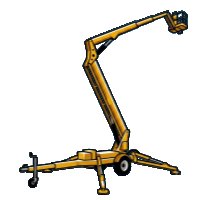 | ✅ Fast Relocation: Move quickly between jobs without a commercial hauler. |
Already own a Class 2/3 pickup or light truck | | ✅ No Extra Transport Cost: Hook up and go with your existing vehicle. |
Lawns, gardens, slopes, uneven terrain | | ✅ Low Ground Impact: Lightweight design with leveling outriggers helps protect finished surfaces. |
Growing a regional rental fleet | | ✅ Lower Investment: Affordable purchase price and broad rental appeal. |
50,000+ sq.ft projects lasting weeks |  | ✅ Built for Continuous Use: Higher duty cycle and larger platform capacity. |
⏱️Frequent Repositioning Move every 5–10 minutes along a building façade | 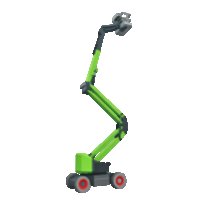 | ✅ Drive While Elevated: Reposition without lowering the platform or resetting outriggers. |
After comparing equipment types, the next logical step is selecting a manufacturer that provides reliable machines, responsive support, and long-term operating value. GLT LIFTS engineers commercial-grade towable boom lifts designed to meet rigorous jobsite demands:

GLT LIFTS commercial-grade towable boom lift equipment highlights.
Versatile Working Heights: Towable boom lifts offering working heights up to 72 ft, delivering heavy-duty reach for residential tree work, facility maintenance, and structural construction.
Heavy-Duty Lift Capacity: Up to 200 kg (440 lbs) platform capacity, comfortably accommodating operators, heavy tools, and materials.
Hydraulic Auto-Leveling Outriggers: One-touch automatic leveling system enables safe, stable setup on uneven ground, slopes, and soft turf in seconds.
Pickup-Truck Towable Design: Engineered with heavy-duty highway axles and standard ball hitches, allowing effortless towing with standard commercial pickups or service vans.
Compact Footprint for Tight Access: Narrow chassis designs allow equipment to pass through standard commercial gates, tight residential side yards, and urban alleyways.
Factory-Direct & OEM/ODM Capability: Direct-from-manufacturer pricing structures paired with custom engineering capabilities (OEM/ODM) to meet specific fleet specifications.
U.S. Local Service & Parts Support: Supported by dedicated regional parts warehouses and repair service networks located in Texas and Georgia, ensuring rapid component delivery and minimal operational downtime.
Yes, outriggers are mandatory, and they actually make towable boom lifts exceptionally safe on uneven terrain.
Unlike heavy self-propelled units that rely on massive internal counterweights, towable lifts utilize hydraulic outriggers to establish a wide, ultra-stable footprint. Commercial-grade units feature one-touch hydraulic auto-leveling outriggers that automatically deploy and adjust each footing independently. This allows the machine to safely level its chassis on mild inclines, sloped driveways, and uneven turf before permitting the boom to elevate. When working on soft soil or gravel, using heavy-duty outrigger pads evenly distributes the machine's ground pressure, preventing sinkage and providing superior stability compared to driveable lifts on soft ground.
To select the right aerial lift for your operations and fleet budget, evaluate four core operational factors:
Jobsite Mobility & Repositioning Frequency:
If your team needs to drive along a continuous wall or structure every 5 minutes while elevated, a self-propelled lift offers maximum speed. If your work involves staying parked in one area to complete a task (e.g., tree trimming, lighting repair, exterior painting) before moving to a new address, a towable lift delivers optimal productivity.
Transit & Transport Logistics:
Towable boom lifts can be towed directly behind standard work trucks using standard ball hitches, eliminating thousands of dollars in commercial flatbed hauling fees. Self-propelled lifts require dedicated heavy-duty transport trailers and Class 8 flatbeds for highway travel.
Turf & Ground Protection Requirements:
Towable lifts are significantly lighter than self-propelled units. Their wide outrigger pads distribute machine weight evenly, making them the preferred choice for residential lawns, manicured turf, and decorative paved driveways.
Capital Investment & Total Cost of Ownership (TCO):
Towable lifts require a much lower initial purchase price, lower ongoing maintenance (due to simpler drive systems), and lower insurance premiums—delivering a significantly faster capital payback (average ROI within 12–18 months).
There is no single "best" aerial work platform—there is only the machine that aligns with your daily operational realities.
Choose a Towable Boom Lift if your revenue depends on rapid site-to-site transportation, lower equipment investment, and versatile multi-location service calls.
Choose a Self-Propelled Boom Lift if your productivity relies on continuous elevated mobility across expansive, long-term construction or industrial sites.